
Hi, I’m Cinna.

I build software, work on mathematical proofs, and lead programming for Titan Robotics. This is a little home for what I’m making.

Try something on the desk A bit about me

Cinna’s desk

↑ Project shelf

The workbench

Sound, cards, bits, and a number line.
Here’s what I’m doing with them.

DOPPLERGEISTOpen recording notes ↗

Where was
the microphone?

Livermore recording100–400 Hz
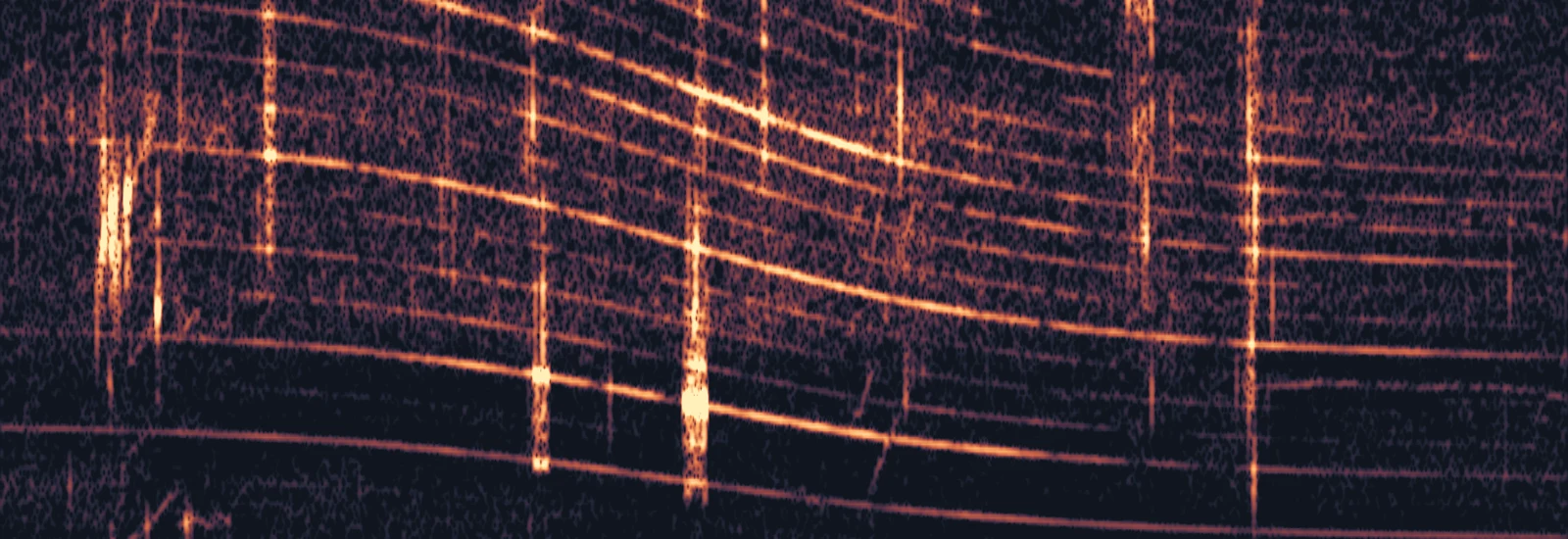
Bright harmonics bend downward in the flyover recording as the aircraft pitch falls.
0:00Time →1:25
Follow the bright curves as you listen. The pitch drops as the plane passes. A match is a candidate, not automatically a location.
Recording: Praveen Pathak · CC BY 4.0

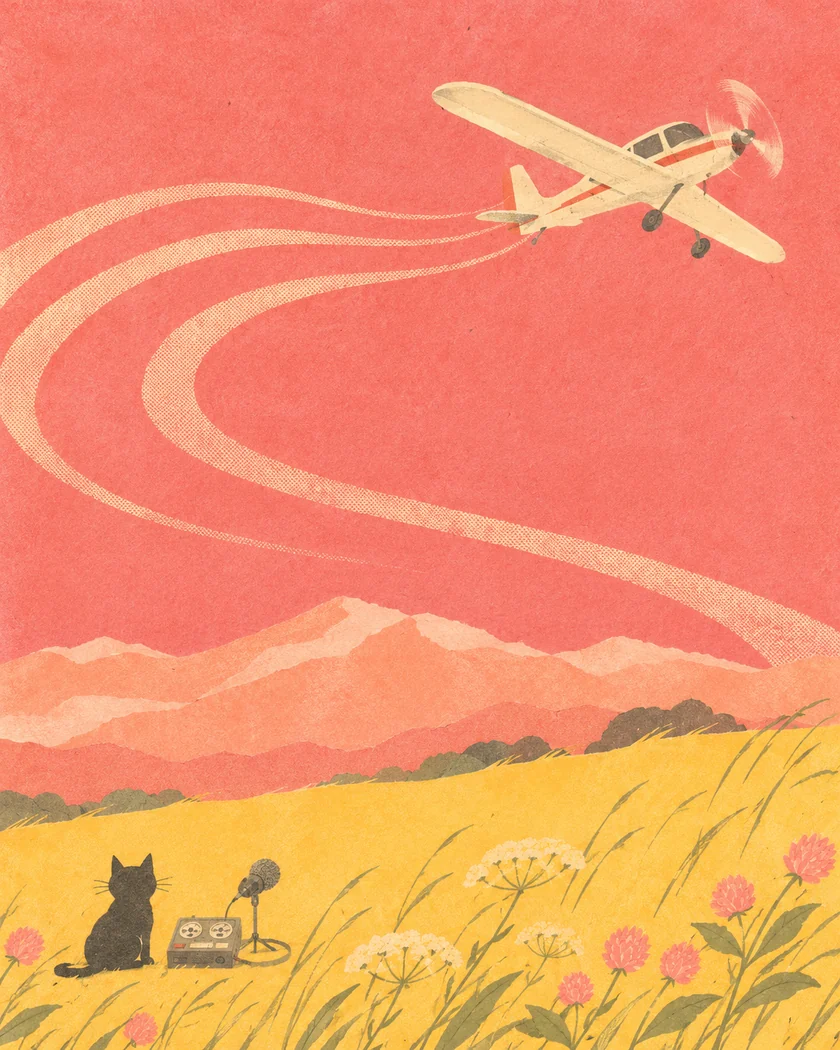
A passing aircraft leaves a curve in a recording. I’m building DOPPLERGEIST to match that changing pitch against historical flight tracks.

Link to this experiment
See the location searchHistorical run · inconclusive

One recording, many possible microphone positions.

This search compared the recording with nearby flight tracks in a constrained region and time window. It did not establish a location: 187 track evaluations exceeded the supported trajectory model, leaving the search incomplete.
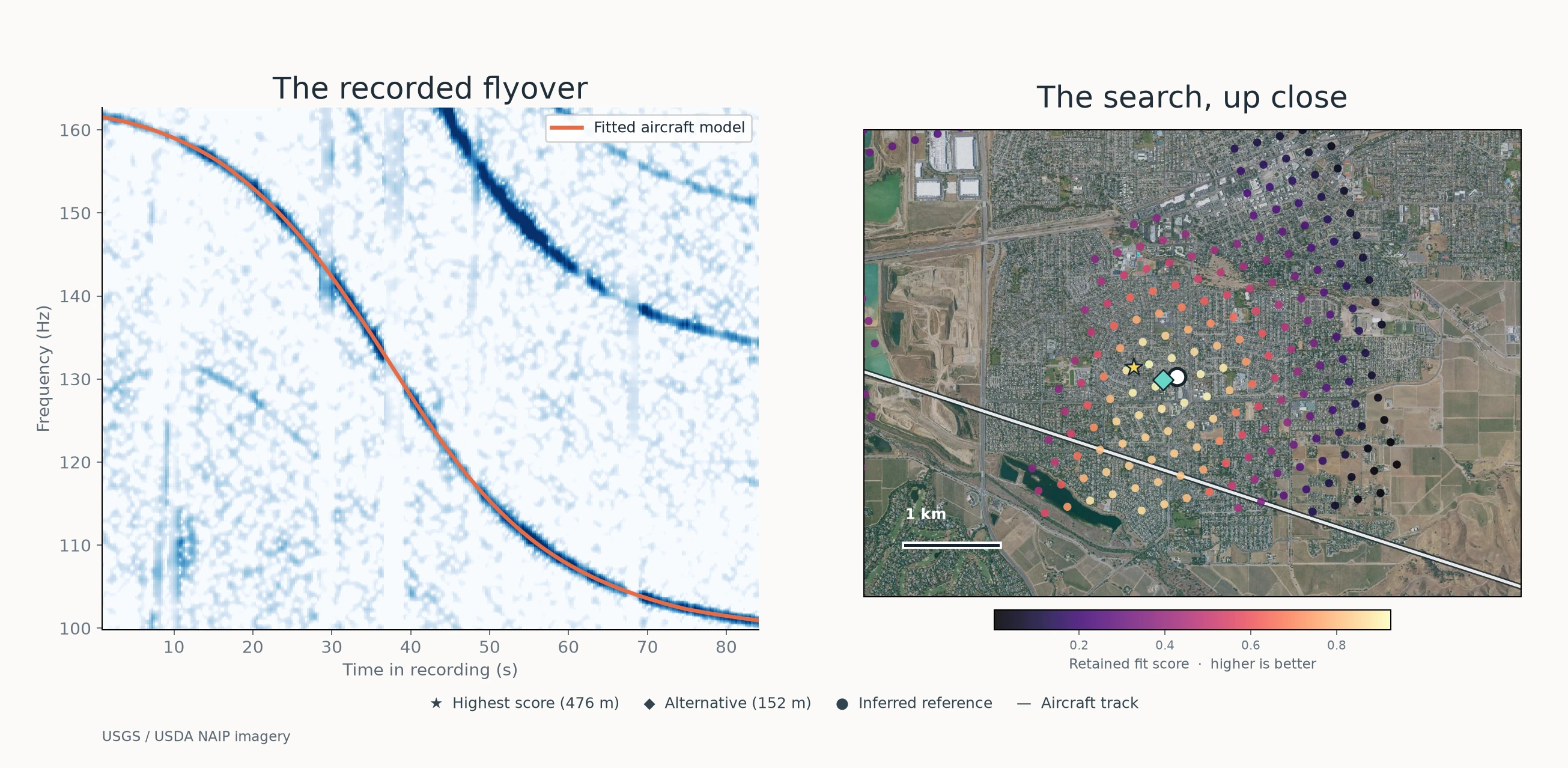
Colors show fit scores, not probabilities. The star is the highest score; the circle is an inferred reference, not surveyed truth. This cropped map does not show every searched point.
Figure © 2026 Cinna Davis · PolyForm Noncommercial. Imagery: USGS / USDA NAIP. Recording: Praveen Pathak · CC BY 4.0.
A collection of proofsOpen project notes ↗

One more round.
Forever.

The next cardsTurn 0 / 90
Player A158 cards
Player B108 cards
Player C47 cards

Highest card wins. Won cards go underneath, highest first.

The numbers are ranks in the actual 23-card deal, not a standard 52-card deck.

This three-player War deal returns to exactly the same card order after 90 turns. Nobody runs out. Then the whole game repeats.

It’s one example from my collection of proofs and counterexamples with GPT-6.2 Astra. The notes are unrefereed; Lean status is recorded per result.

Explore the full cycle Link to this experiment
Hack CPUOpen project notes ↗

A number,
one switch at a time.

Hack A-instruction15-bit address
@42

Each 1 contributes its place value.

0fixed000 0000 0010 1010

32 + 8 + 2 = 42

I extended the Hack CPU with a two-stage pipeline, branch prediction and fused instructions.

Start with something smaller: the 16 bits in an A-instruction. The first bit stays zero. The other 15 hold an address.

Try the branch predictor Link to this experiment
A collection of proofsOpen project notes ↗

How tightly can
you pack a line?

Forbidden gaps: 2, 5, 9Period 7

One pattern, repeated three times.

0123456
78910111213
14151617181920

The pattern continues in both directions. Each row continues the same line.

Fraction of all integers selected: 3/7

No pair is 2, 5 or 9 apart.

Why is 3/7 the limit for these gaps?

Within any seven consecutive integers, gaps 2 and 5 form a cycle: 0, 2, 4, 6, 1, 3, 5, then back to 0 (shifted to that block). Two neighbors cannot both be kept, so at most three of the seven fit.

That limits every block of seven, not just repeating patterns. Repeating 0, 1, 4 reaches the bound and also avoids 9. This explains one example; the linked proof handles general triples.

Choose integers, but never choose two that differ by 2, 5 or 9. Here, a seven-position pattern repeats along the whole number line.

The pattern 0, 1, 4 fills three of every seven positions without a forbidden gap. This is a worked example from the Haralambis result, not a proof of the general theorem.

Read the argument Lean source for this example Link to this experiment

The project files

GitHub repositoriesProject pages

My notebook.

I’m a senior at the Illinois Mathematics and Science Academy. Some of my work lives in proofs and code. Some of it has to run a robot. Read more about me.

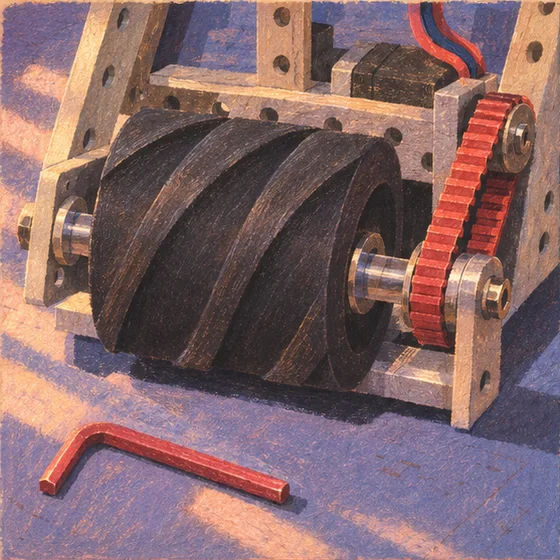
An intake roller, drive belt and hex key on the worktable.

Code that has to
move something.

I lead programming for Titan Robotics, FIRST Team 2022. Our team of ten writes the robot’s Java code. I teach rookies, review code, and dig through match logs when the robot does something we didn’t ask it to.

Run. Reverse. Stop.
public void run() {
  setVoltage(DEFAULT_VOLTAGE);
}

public void reverse() {
  setVoltage(-DEFAULT_VOLTAGE);
}

public void stop() {
  setVoltage(0);
  motor.stopMotor();
}
From my intake subsystem contribution

Meet Timmy, our 2026 robot ↗

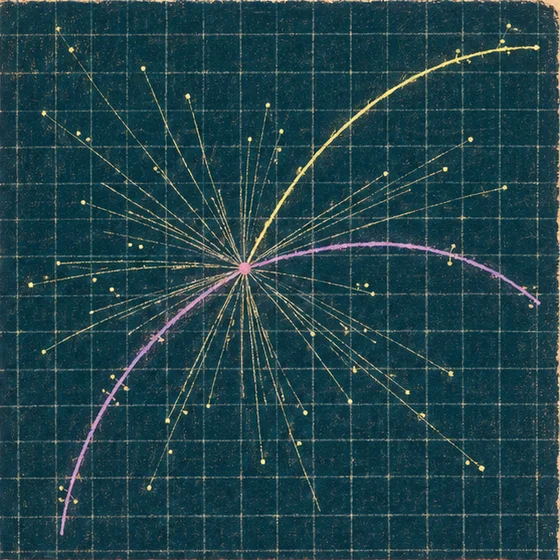
Particle tracks radiating across a dark field.

Looking for
a rare signal.

With Dr. Peter Dong’s group in IMSA–CMS through Fermilab, I write software for a search for a doubly charged Higgs boson.

Ordinary collisions can look like the signal. At high masses, simulations give us very few of those lookalikes to count. Nathan Catlett and I developed a way to estimate that background, and I wrote most of the code for it.

Research abstract

Conservative Estimate of the Doubly Charged Higgs Boson Background Using Kernel Density

Nathan Catlett & Cinna Davis

IMSAloquium ·

Read the abstract
A school computer with a pencil and an open notebook.

Passing it on.

I’m co-president of Epoch, our computer science club, where I’ve taught Linux workshops. I was also a teaching assistant for Elements of Computing Systems I and II.

I played varsity Scholastic Bowl, too. At Scobol Solo I won biology and tied for first in chemistry.

Letters & links.

A calico mail carrier with a pink envelope at a moonlit window.
A postcard for you.

Combinatorics

Solved conjectures

Open GitHub repo

I curate this collection of proofs and counterexamples with GPT-6.2 Astra. The notes are unrefereed. Each entry links to its argument, and the catalogue records which results have complete or partial Lean formalizations.

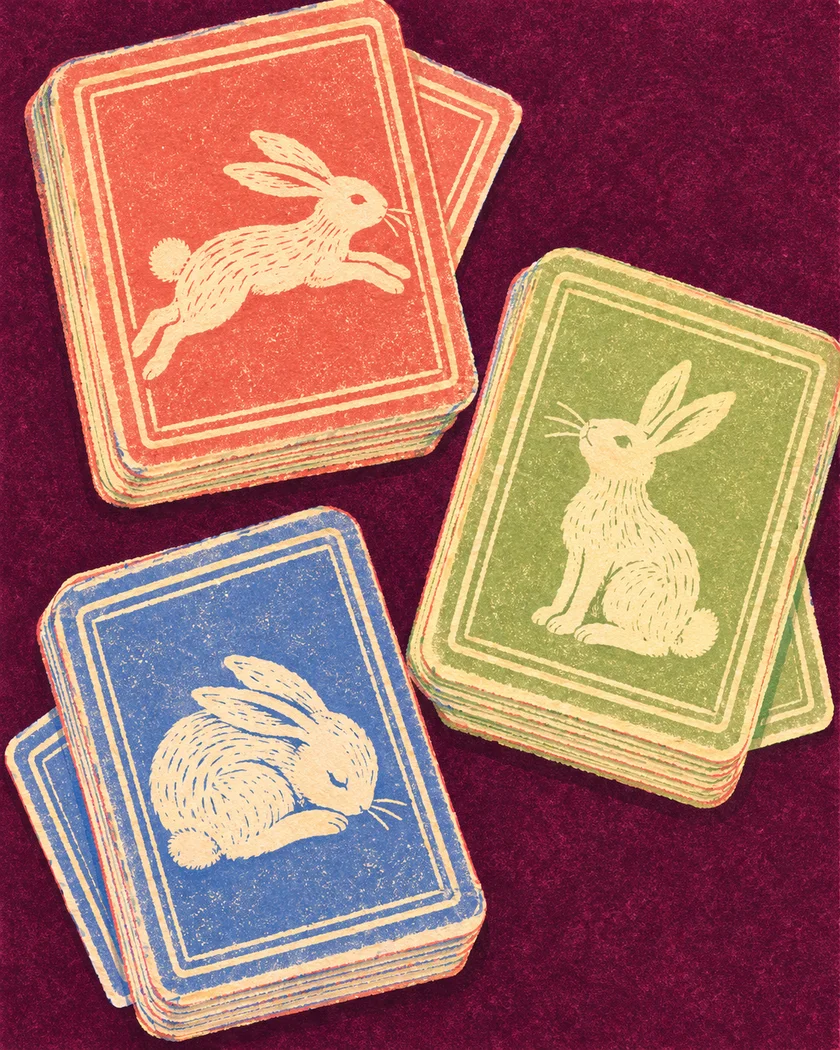
A card game that never ends

This three-player War deal uses 23 different ranks. Each player reveals a card. The highest wins all three and collects them in descending order.

A 15B 10C 4
Starting deal. The next three cards are face up.
Compare every card with the start

A repeat means the same cards in the same order, in all three hands. Equal hand sizes alone are not enough.

Starting deal: every position matches.

Start above; current below. A dashed border means that position differs from the start. Read positions left to right; the first card is next to play.

Player A · 8 cards

Start above · Current below

1515
77
1616
88
11
2222
1717
99

Player B · 8 cards

Start above · Current below

1010
22
2323
1818
1111
1919
1212
33

Player C · 7 cards

Start above · Current below

44
2020
1313
55
2121
1414
66
Search the collection

Aircraft audio

DOPPLERGEIST

Open GitHub repo

Can a recording tell you where the microphone was? DOPPLERGEIST compares an aircraft’s changing pitch with historical flight tracks. Matching needs a justified UTC start time or a bounded time window.

Frequency ↑ 100–400 Hz

The recorded aircraft’s harmonics slope down as its pitch falls.

The bright curves are tones from the aircraft. Follow them from left to right: the pitch falls as it passes.

Flyover recorded by Praveen Pathak · CC BY 4.0 · Figure and audio credits
Open DOPPLERGEIST

Algorithms

Integer factoring

Open GitHub repo

I work on deterministic integer factoring. The repository gives this Lean-verified bound for finding the smallest prime factor of an n-bit integer.

T(n)=exp(O(nlogn))
Asymptotic worst-case time, not a measured speedup. Theorem and scope
221 = 13 × 17 This little demo tries divisors in order. It illustrates factorization, not the research algorithm.
See the divisions
  1. 221÷ 13 →17

17 is prime, so it is the last factor.

Read the proof

Hardware

The Hack CPU

Open GitHub repo

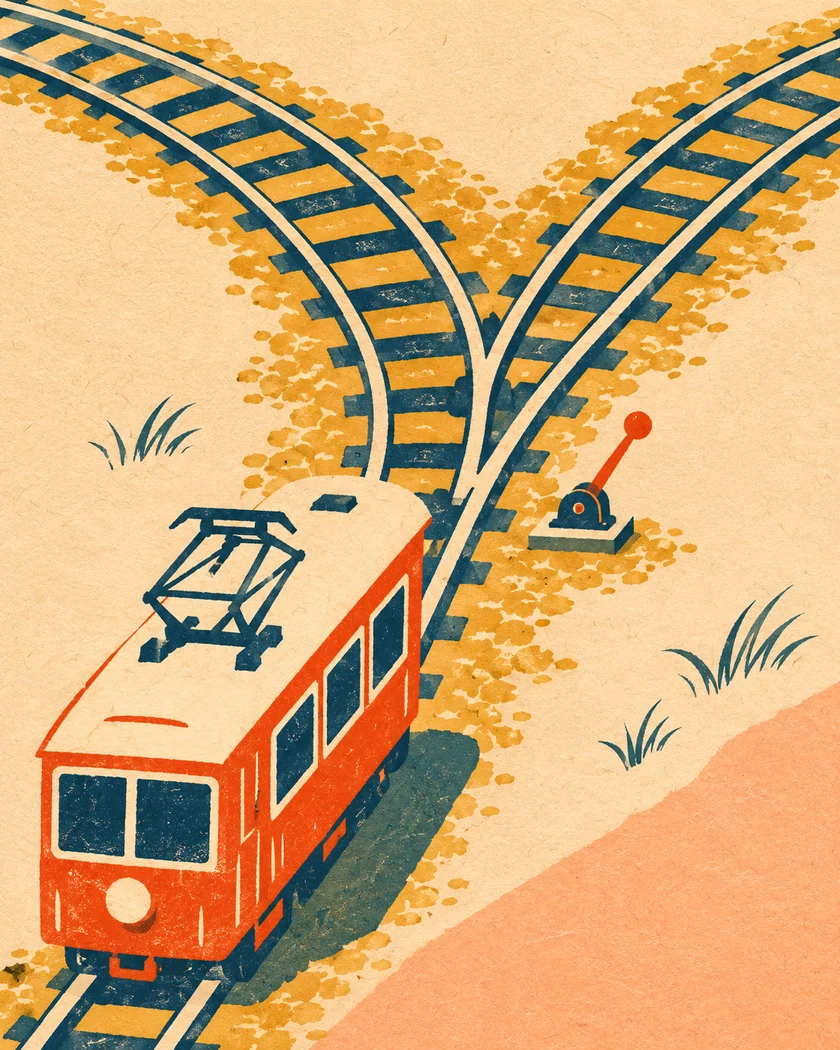
For my computing systems capstone, I extended the Hack CPU with a two-stage pipeline, a global-history branch predictor, and fused instructions. Like a train approaching a switch, the processor has to pick a route before it knows whether a jump will be taken.

Train the predictor

Try one entry in the prediction table. Feed it jump outcomes and watch its two-bit counter change.

01 · Weakly predicts not taken.

The counter guesses before seeing the next outcome. Try a few taken jumps, then switch.

When the guess is wrong

A loop subtracts 5 until D reaches zero. See how the processor recovers when it predicts one more jump.

Recorded RTL simulation190 ns
Fetch Reading ahead

Address 5D = D − A

Wrong path · will be discarded
Execute Resolving the instruction

Address 6D;JGT

D is zero · do not jump
Register D = 0A = 5 throughout

Predicted next address: 5. Correct next address: 7.

At the next rising edge (195 ns), fetch redirects to 7 and an inserted NOP replaces the wrong-path instruction. D stays zero.

Five snapshots from the existing testbench, 170–210 ns. These are simulation timestamps, not hardware speed measurements. An inserted NOP is a pipeline bubble, not program address 0.

See the processor

Campus software

Schedule map

Open GitHub repo

A school schedule is easier to read when you can see which room you need for each class period. I built a Rust tool that turns an IMSA schedule into a day-by-day room list.

From class rows to room lists

Example data, not my class schedule

Selected input fields

Mathematics2(A,C-D) · S1 · Room A113
Physics3(B,I) · S1 · Room B204

S1 room list

Periods 2–3 shown; all other periods are free in this example.

A day
Period 2
A113
Period 3
Free period
B day
Period 2
Free period
Period 3
B204
I day
Period 2
Free period
Period 3
B204
C day
Period 2
A113
Period 3
Free period
D day
Period 2
A113
Period 3
Free period

The tool processes your schedule in your browser. Nothing is uploaded or saved.

Try this example week ↗
Open the schedule tool

Graph theory

Conway’s 99-graph

Open GitHub repo

Conway asked for a graph with 99 vertices and 14 neighbors per vertex. Adjacent vertices must share exactly one neighbor; nonadjacent vertices must share two. Whether it exists is still open. My work includes an unrefereed proof that such a graph has at most 120 induced 3 × 3 rook grids.

A rook connects positions in the same row or column. Choose one position, or compare a pair: which neighbors do both share?

Dark positions are selected; lavender positions are shared neighbors when comparing a pair. This nine-vertex grid shows the counting rule, not a 99-vertex solution: each square has four neighbors, not fourteen.
Explore the research